
Enjoy on desktop to learn more about the strategy behind the design.
Position Overview
At the Piper Center for Vocation & Career, I created strategic visual communications that drive student engagement and institutional impact. I designed across multiple formats such as posters, brochures, digital graphics, and website visuals, each crafted to support the center's career and vocational initiatives. Working closely with the Piper Center team, I developed materials that balance creativity with clarity: visually compelling enough to capture attention, but strategically aligned with institutional goals and accessible to diverse audiences. My approach prioritizes communication effectiveness alongside brand integrity, ensuring every design serves both aesthetic and strategic purposes.
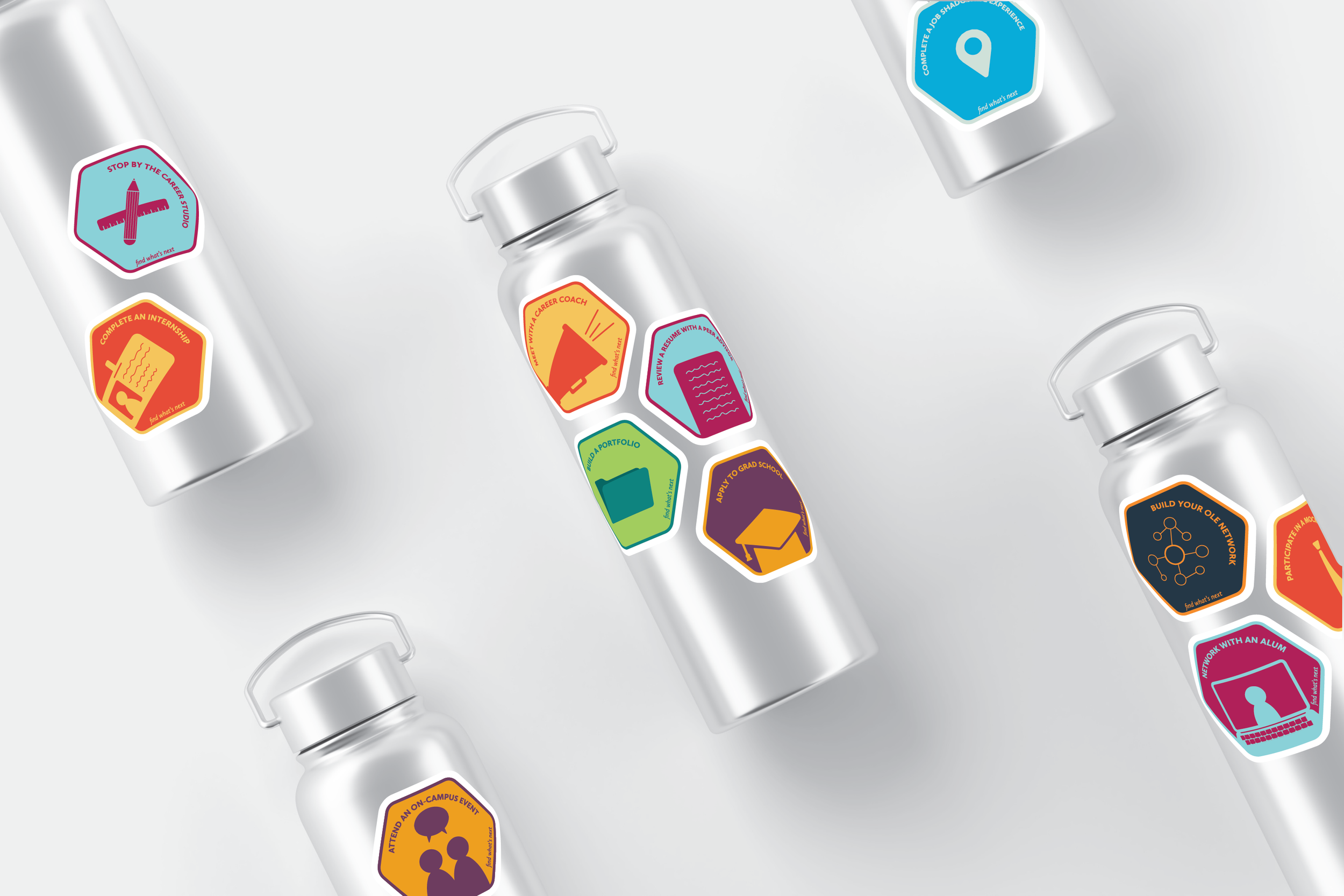
Badge Collection Stickers
I designed a gamified badge system that rewards students for completing career center milestones. Each badge represents an achievement. From resume workshops to skills assessments, these give students tangible motivation to engage with the center's programs while visually communicating the value of their progress.


Outcome
Participation in the Piper Career Center increased as students became motivated to complete more activities and "collect" badges. The stickers gave students something tangible to work toward, turning abstract career development into a concrete, achievable goal. By combining strategic gamification with thoughtful visual design, the badge system proved that good design doesn't just communicate, it drives behavior and builds engagement.
Solution
I identified gamification as the key to driving consistent engagement. Rather than simply promoting the center's resources, I created a visual incentive system where progress becomes tangible and collectible. By designing badges that students could accumulate as they explored different career center offerings, I built a system that naturally encourages exploration and repeat visits.
Problem
Students weren't fully engaging with the Piper Career Center's resources. While the center offered valuable programs and workshops, many students didn't explore its full range of opportunities or follow through on career development activities. Participation was inconsistent, and the center struggled to motivate sustained engagement.









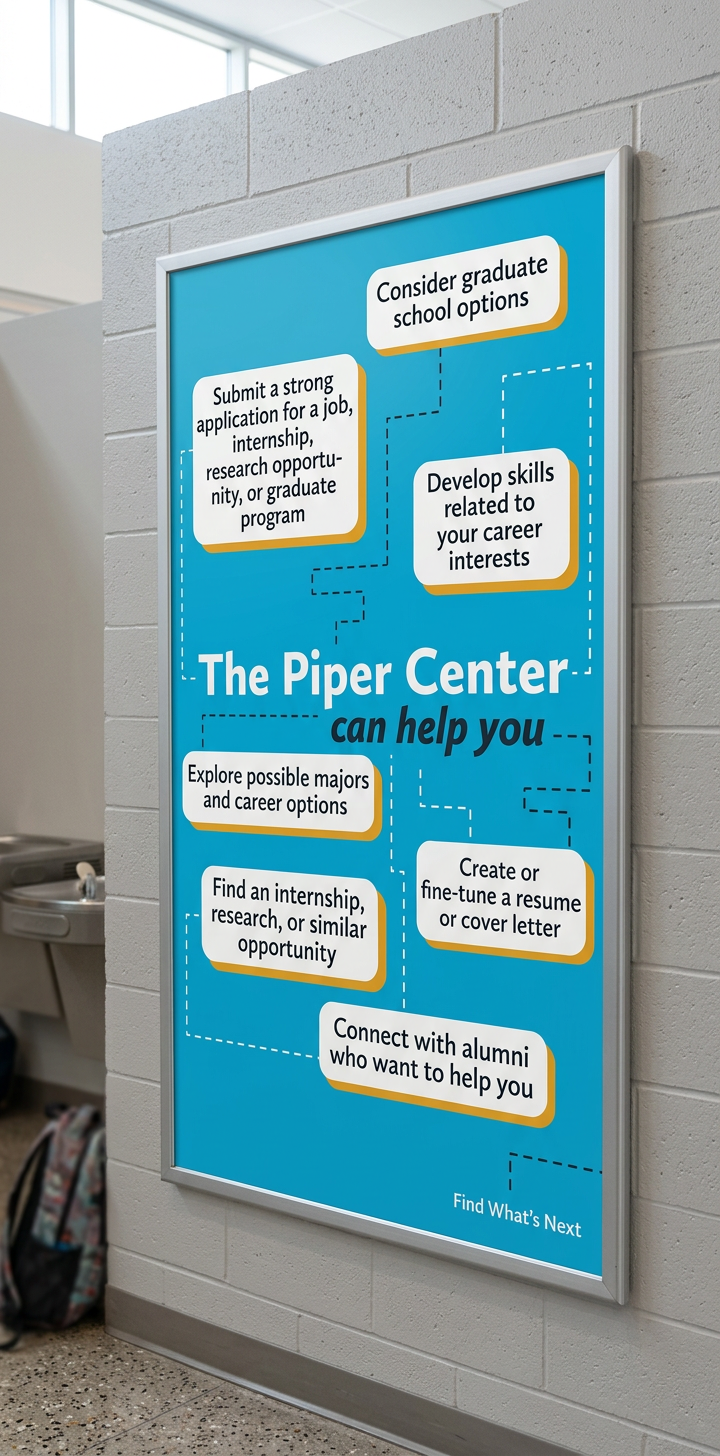
I designed a suite of printed materials such as signage, business cards, bookmarks, and postcards that extend the career center's visual identity across multiple touch points. Each piece reinforces the brand while serving a practical function, creating a cohesive ecosystem that keeps the center top-of-mind. The consistency across formats builds trust and establishes the center as professional and intentional, encouraging ongoing student engagement.
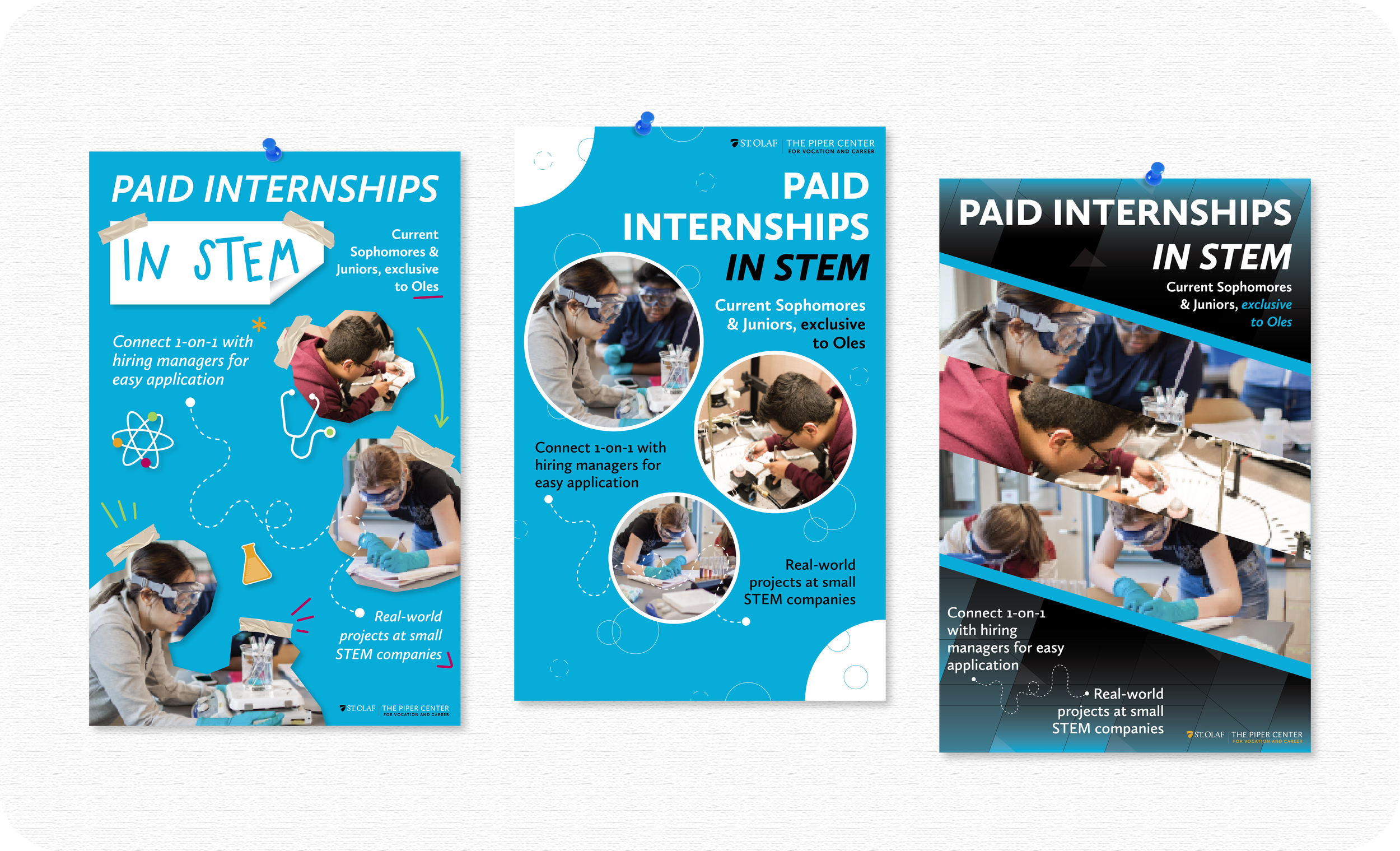
Posters
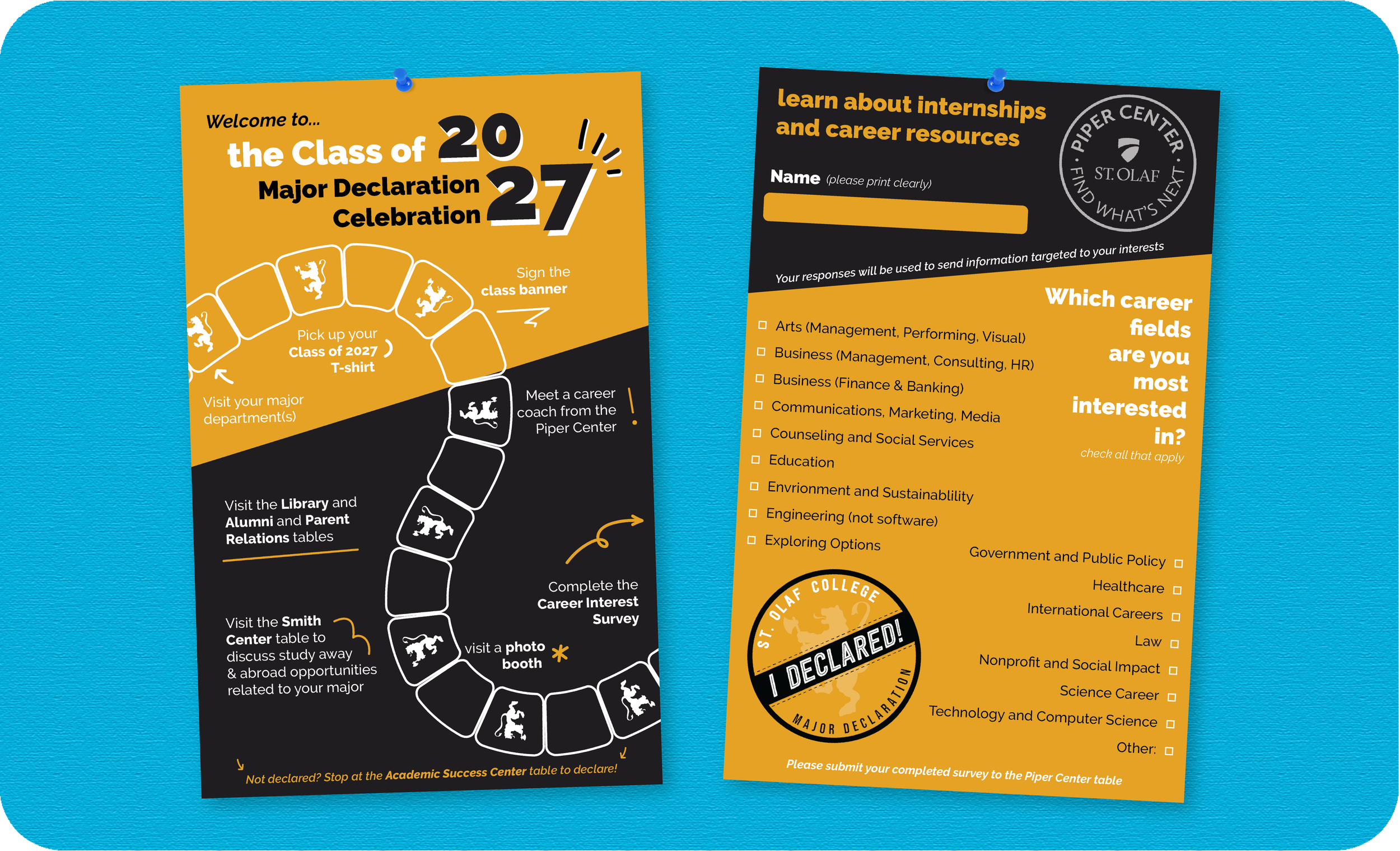
Student-facing posters demand more than just information. They need to capture attention and spark interest. I designed posters that balance visual energy with clear messaging like bold typography, strategic color, and compelling imagery that speak to student interests while maintaining information hierarchy. Each poster cuts through campus noise by combining dynamic aesthetics with straightforward communication, ensuring students both notice and understand the career center's offerings.
Problem
Career center events and programs weren't reaching students to the optimal capacity. Static posters blended into the campus environment, failing to capture attention or motivate action. Without compelling visual communication, student awareness remained low and participation suffered.
Solution
I redesigned posters with interactive and engaging visual elements that commanded attention. The design approach prioritized stopping students in their tracks, making them pause, look closer, and want to learn more about what the career center offered.
Outcome
With visually compelling posters in circulation, student awareness of career center programs increased significantly. Students took notice, engaged with the messaging, and showed up to events at higher rates. The posters proved that thoughtful design directly impacts visibility and participation, transforming communication from background noise into a driver of action.
Problem
Students had limited access to career center information beyond campus walls. One-time encounters with posters weren't enough to build lasting awareness or engagement. The center needed materials that students could take with them, keep, and reference, creating multiple touch points that extended the center's reach beyond physical visits.
Solution
I created a strategic series of printed materials designed to be collected, kept, and shared. Business cards and postcards gave students portable reminders of the center's resources. Bookmarks turned everyday study moments into brand touchpoints. Signage created wayfinding and credibility. Each material was intentionally designed to live in students' spaces.
Outcome
By distributing materials students actually wanted to keep, the career center extended its presence into students' daily lives. Word-of-mouth increased as students shared business cards and postcards with peers. The cohesive design across all materials reinforced institutional credibility and ensured consistent messaging. Students encountered the center's brand repeatedly, building familiarity and trust that translated into sustained engagement.


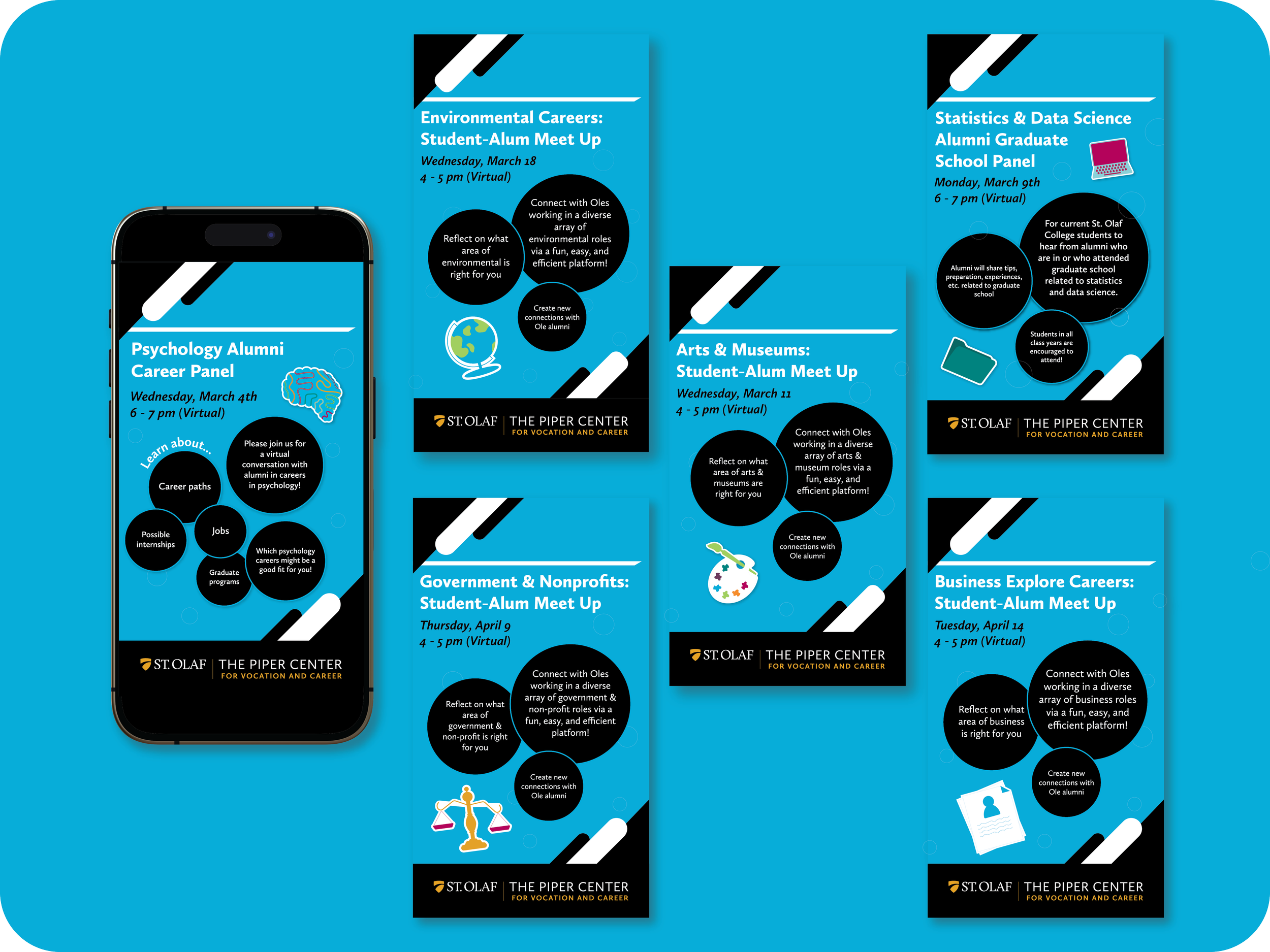
Social Media & Web
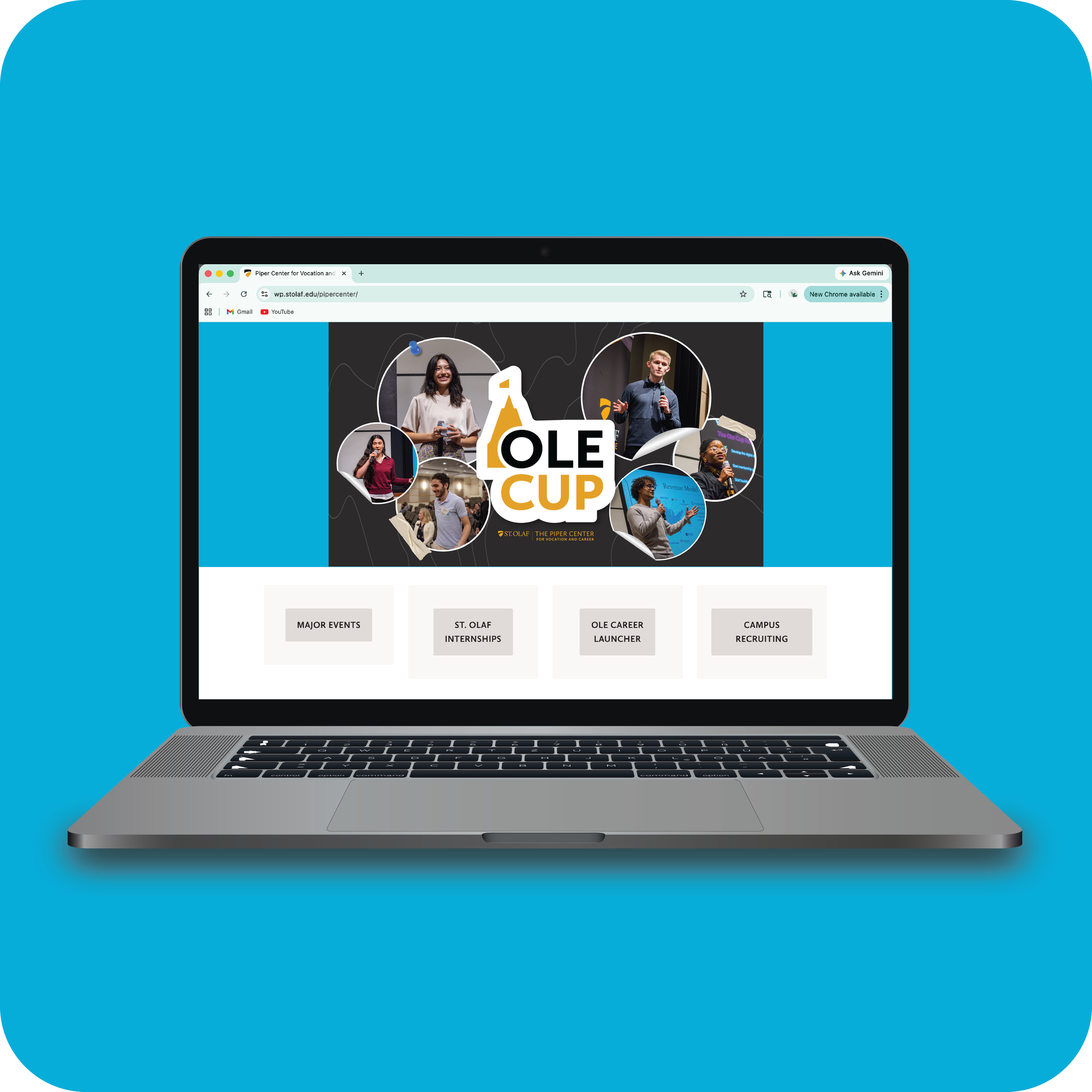
I developed the career center's digital presence through strategic social media content and web design. Event landing pages provided dedicated spaces where students could learn program details, register, and explore resources. Together, these digital touchpoints made the center discoverable and accessible, meeting students where they already spend time while driving traffic to key programs and resources.
Problem
The Piper Career Center's online presence wasn't serving students effectively. The website felt outdated and difficult to navigate, event information was scattered, and social media wasn't driving meaningful engagement. Students struggling to find program details or upcoming events online were less likely to participate, creating a disconnect between the center's offerings and student awareness.
Solution
I redesigned the digital experience with user-friendly visuals that prioritized clarity and accessibility. Event landing pages were structured to guide students from discovery to registration with intuitive layouts and compelling visuals. Social media content shifted to engaging storytelling that showcased programs in action.
Outcome
With a clearer, more visually engaging online presence, students began discovering programs more easily and converting at higher rates. Social media engagement increased as content became more appealing and shareable. Event landing pages reduced friction in the registration process, leading to higher attendance. The redesigned digital experience proved that thoughtful web and social design directly impacts student discovery and participation.